ServicesConcrete Courtyards
Concrete Courtyards in Lake Forest
A courtyard sits close to your front door, windows and stucco, so the work has to be careful as well as correct. We grade it to shed water, choose a finish that suits the house, and keep your walls and plantings covered until the last form comes out.
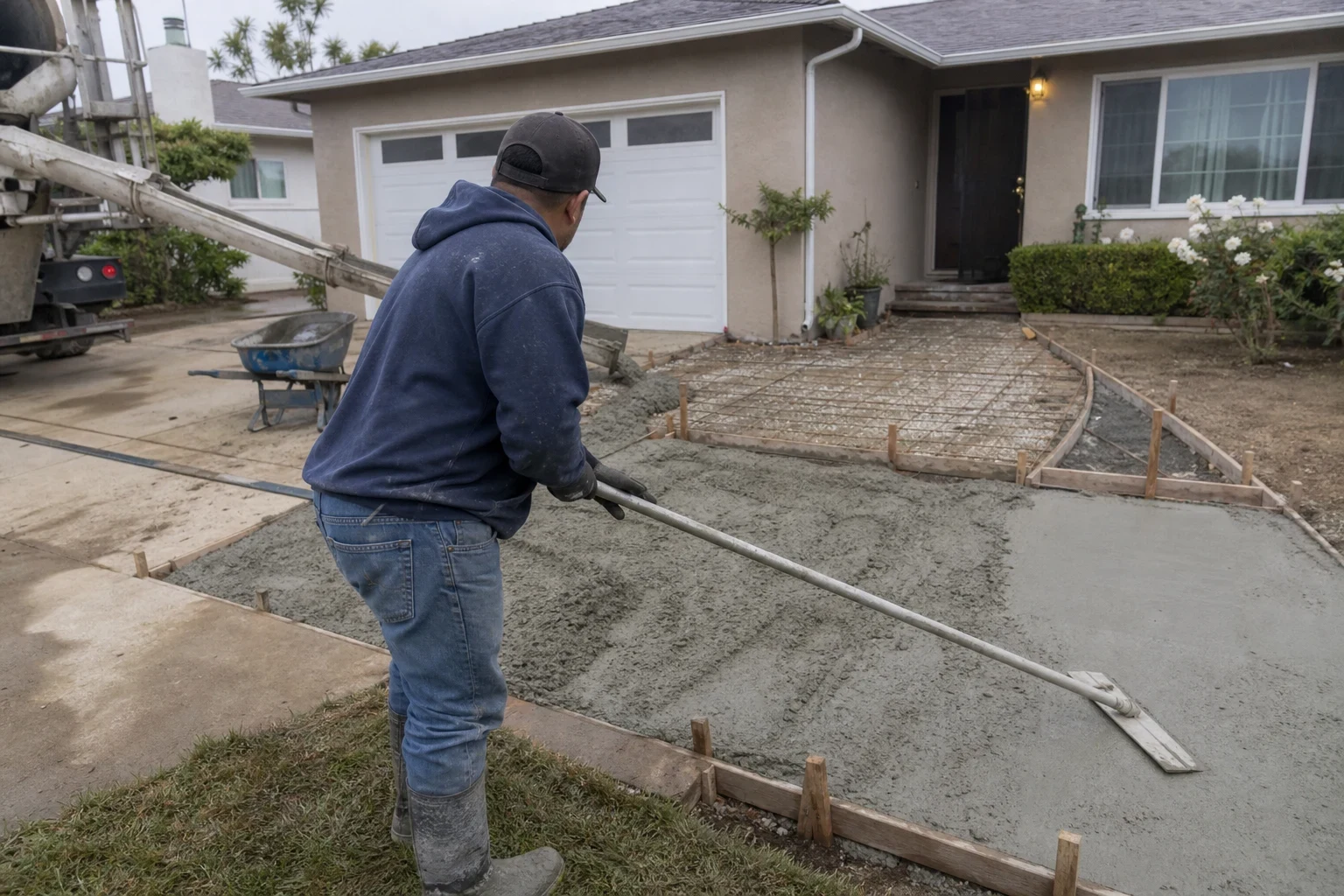
A Courtyard Is Concrete With Walls Around It
Most flatwork has open edges. A courtyard is usually boxed in by the house on two or three sides, sometimes with a gate as the only way in. That changes almost everything about the job: where water goes, how the concrete gets there, and how much care the surrounding surfaces need.
We plan the slope first. Every square foot should fall away from your foundation toward an area drain or an open edge, and the finished surface has to stay below the stucco weep screed so walls can breathe and dry. Get those two things right and the courtyard stays clean and dry for years.
Then comes the part you see every day. We pour courtyards in a light broom, a soft salt finish, integral color or a stamped pattern, and we can match the look of an existing patio or walkway so the spaces read as one.
What Your Courtyard Project Includes
Protection before demolition
We cover entry doors, windows and low stucco with plastic and tape, lay plywood paths over any finished surface we cross, and wrap or stake back plants you want to keep. Nothing gets moved without asking you first.
Removal and grading
Old pavers, brick or worn concrete come out, and the soil is cut to depth. We compact a gravel base so the slab has even support from wall to wall.
Drainage built into the slab
We set the fall toward area drains or a trench drain and tie them into the existing lines where they can go. Water should never sit against your house.
Forms, reinforcement and joints
Rebar or wire is set on chairs at the right height, an expansion strip goes where the slab meets the foundation, and control joints are laid out to follow the shape of the space rather than cut across it at random.
Finish and curing
We finish to the texture and color you chose, then cure the slab properly so the surface stays hard and even in color. Before we leave, we pull the forms, sweep and rinse, and remove every scrap of protection.
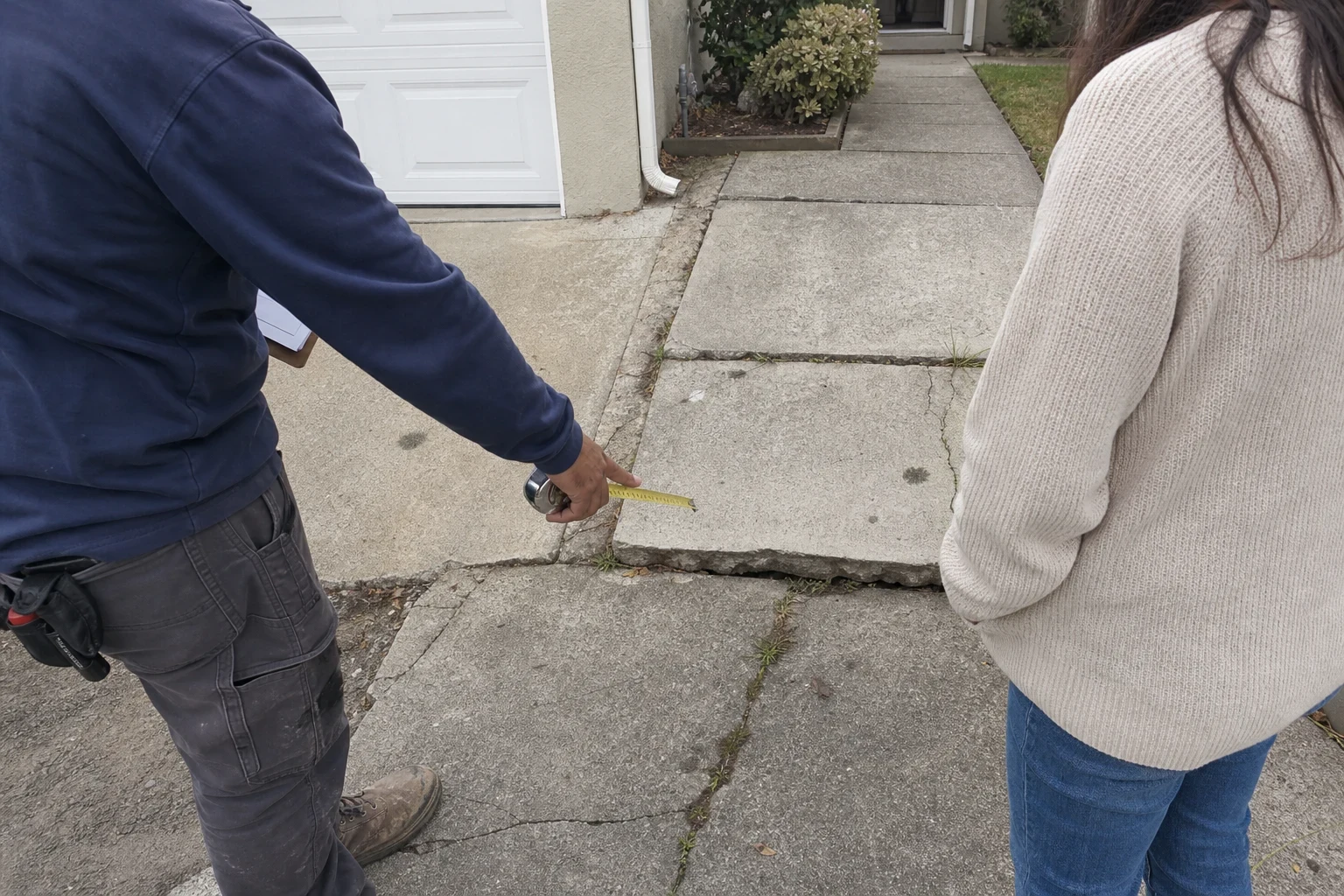
Signs It Is Time for a New Courtyard
- Water pools near the door
- If puddles sit by the threshold after rain or irrigation, the surface is sloped the wrong way. That water ends up against the wall and under the door.
- Pavers have sunk or shifted
- Loose brick and settled pavers trip people and collect weeds. Once the base has failed, a new poured surface is often the cleaner answer.
- The old slab is cracked through
- Wide cracks with one side higher than the other usually mean the base or soil underneath has moved, especially in the expansive clay common to this area. Patching rarely holds for long.
- Concrete sits too high on the wall
- When the surface rides up over the weep screed, moisture can wick into the stucco. Replacing the slab at the correct height protects the wall.
- It no longer suits the house
- Sometimes nothing is failing. The finish is dated, the color clashes with a remodeled entry, or you want the courtyard to match a newer patio.
How a Courtyard Job Runs
- 1
Walk-through and written estimate
We look at the space with you, measure, check how water currently drains and talk about finish. You get a written estimate that spells out removal, base, drainage and finish so you can see what each part covers.
- 2
Access and protection day
We agree on the route in, whether that is a side gate, over a low wall or a pump line run from the street, so crews are not walking through your home. Coverings go up before any tools come out.
- 3
Demolition, base and forms
Old material is hauled away, the base is compacted and the forms and reinforcement are set. We show you the planned slope and drain locations before anything is poured.
- 4
Pour and finish
Concrete arrives and is placed, leveled and finished in one session. Our crew keeps splatter off your walls and rinses anything that gets marked while the mix is still fresh.
- 5
Cure, clean and hand back
Joints are cut, the slab cures, protection comes down and the space is cleaned. We walk it with you and tell you when it is ready for foot traffic and furniture.
What Shapes the Cost of a Courtyard
Courtyards are rarely large, but they tend to be more involved per square foot than open flatwork. Access and drainage carry much of the cost. Your written estimate breaks each of these out so nothing turns up later.
- Access to the space
- A wide side gate lets us bring in material directly. A fully enclosed courtyard usually needs a concrete pump, which adds to the cost but keeps traffic out of your house.
- What comes out first
- Removing thin pavers is quicker than breaking out a thick reinforced slab. Haul-away and disposal depend on how much material there is.
- Drainage work
- Resetting a couple of area drains is a small item. Adding a trench drain or new lines to carry water out of an enclosed space is more.
- Shape and finish
- Curves around planters and fountains take more forming time. Integral color, a salt finish or stamped concrete each add steps beyond a plain broom finish.
Courtyard Questions We Hear Often
- Will your crew need to come through my house?
- Almost never. We bring material in through a gate, over a wall, or with a pump hose run from the street. If the only access truly is through the house, we talk it through with you first and protect the floors along the whole route.
- How long before we can use the courtyard?
- Most slabs can take careful walking within a day or two of the pour. Heavy planters and furniture should wait roughly a week while the concrete gains strength. We will give you specific timing for your slab, based on the mix and the weather that week.
- Can you work around a fountain or plants we want to keep?
- Yes. We form around fixed features and leave planting pockets where you want them. Plants close to the work get wrapped or tied back, and we keep washout water away from the beds.
- Will the new concrete match our existing patio?
- We can match the finish, pattern and joint layout closely. Fresh concrete changes color a little as it cures, so a new pour beside an older slab will look slightly different at first and blend in over the following months. Our Patios and Stamped Concrete pages show more of those options.
- Do we need to be home on pour day?
- It helps to have someone there at the start to confirm the layout and finish, but you are free to leave after that. We will call with updates during the day and let you know once the work is wrapped up.
Ready to Talk About Your Courtyard
Tell us about the space, how you get into it and the look you have in mind. We will set up a time to see it and walk through the options with you.