ServicesRV Parking Pads
Concrete RV Parking Pads in Lake Forest
We build RV parking pads thick enough for a loaded motorhome, sloped to shed water and finished to sit comfortably beside your home. We protect your lawn and planters along the access route and keep you informed from layout to the day you park.
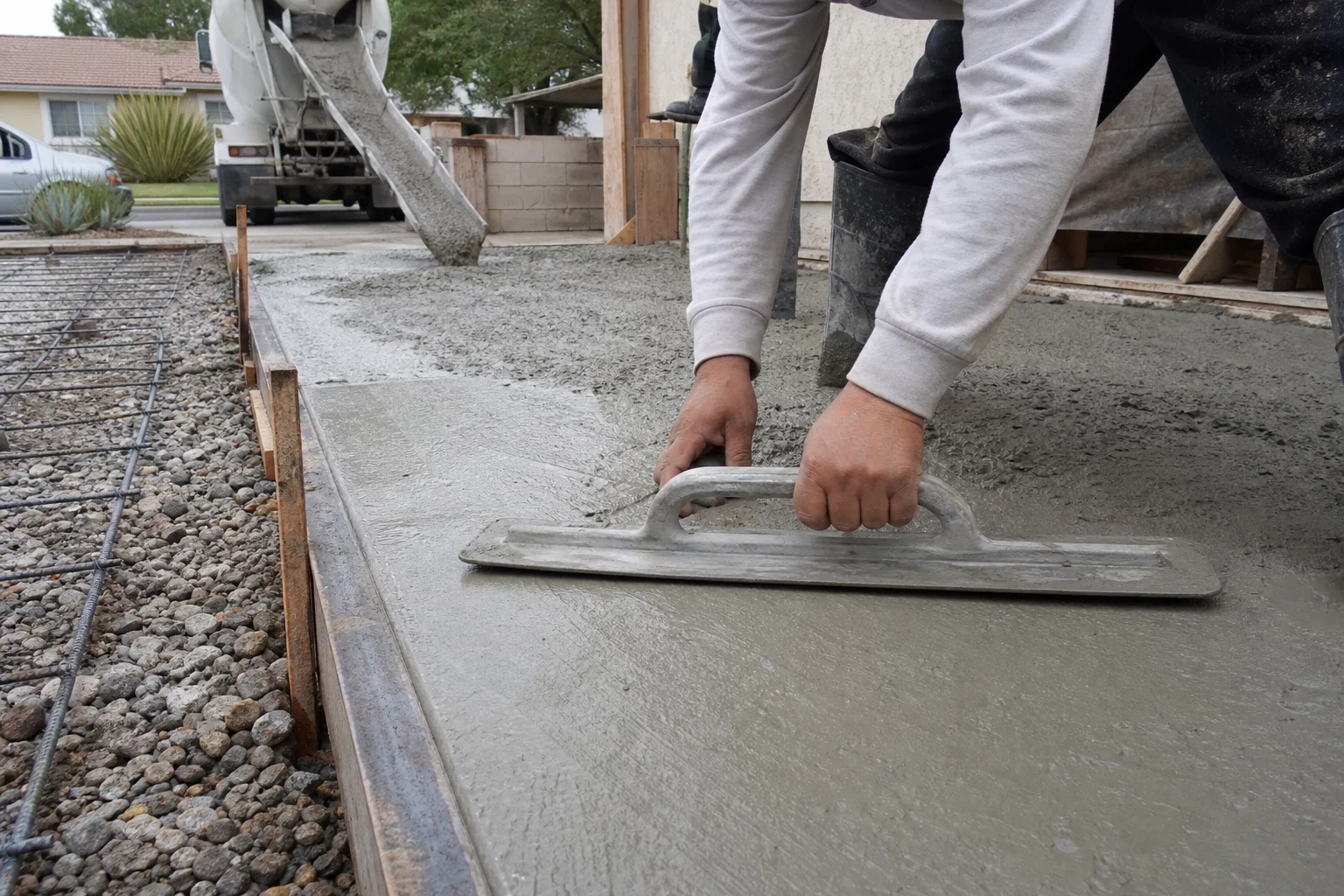
A slab made for weight that sits in one place
An RV pad does harder work than most concrete at your home. A motorhome or fifth wheel puts several tons on a few small tire patches and leveling jacks, and it stays there for weeks. A thin patio-style slab under that load tends to crack at the corners and settle where the wheels rest.
That is why we build these pads differently: a deeper compacted base, a thicker section of concrete, steel reinforcement set at the right height, and control joints placed where the slab can move without showing it. The finish is usually a clean broom texture for traction, though we can match the look of an existing driveway.
Most pads in Lake Forest go in a side yard or beside the driveway, which means the route in often passes lawns, irrigation and planting beds. We map that route with you before any equipment arrives and protect what lies along it.
What your RV pad includes
- Layout sized to your vehicle
- We measure your RV or trailer, including slide-outs and the swing needed to back it in. The pad is staked out so you can see the footprint before we dig.
- Excavation and compacted base
- We remove sod and soft soil, then place and compact aggregate base in lifts. Clay soils common in south Orange County swell and shrink with moisture, so a firm, well-drained base matters more here than the concrete on top.
- Reinforcement and a thicker section
- Rebar is set on chairs so it sits in the middle of the slab instead of on the dirt. The slab is poured thicker than a standard walkway or patio to carry the axle and jack loads.
- Drainage and joints
- We grade the pad to move water away from your foundation and fences. Control joints are cut on a planned spacing so any shrinkage cracks follow straight lines.
- Protection and cleanup
- Plywood goes down over lawn and pavers along the access path, and we flag sprinkler heads before work starts. When the pour is done, we wash out off site and leave the yard tidy.
Signs it is time for a proper RV pad
Ruts in the lawn or gravel
Tires sinking into turf or decomposed granite mean the ground cannot carry the weight. It also makes leveling the RV a chore every time you park.
Cracked or sunken driveway edges
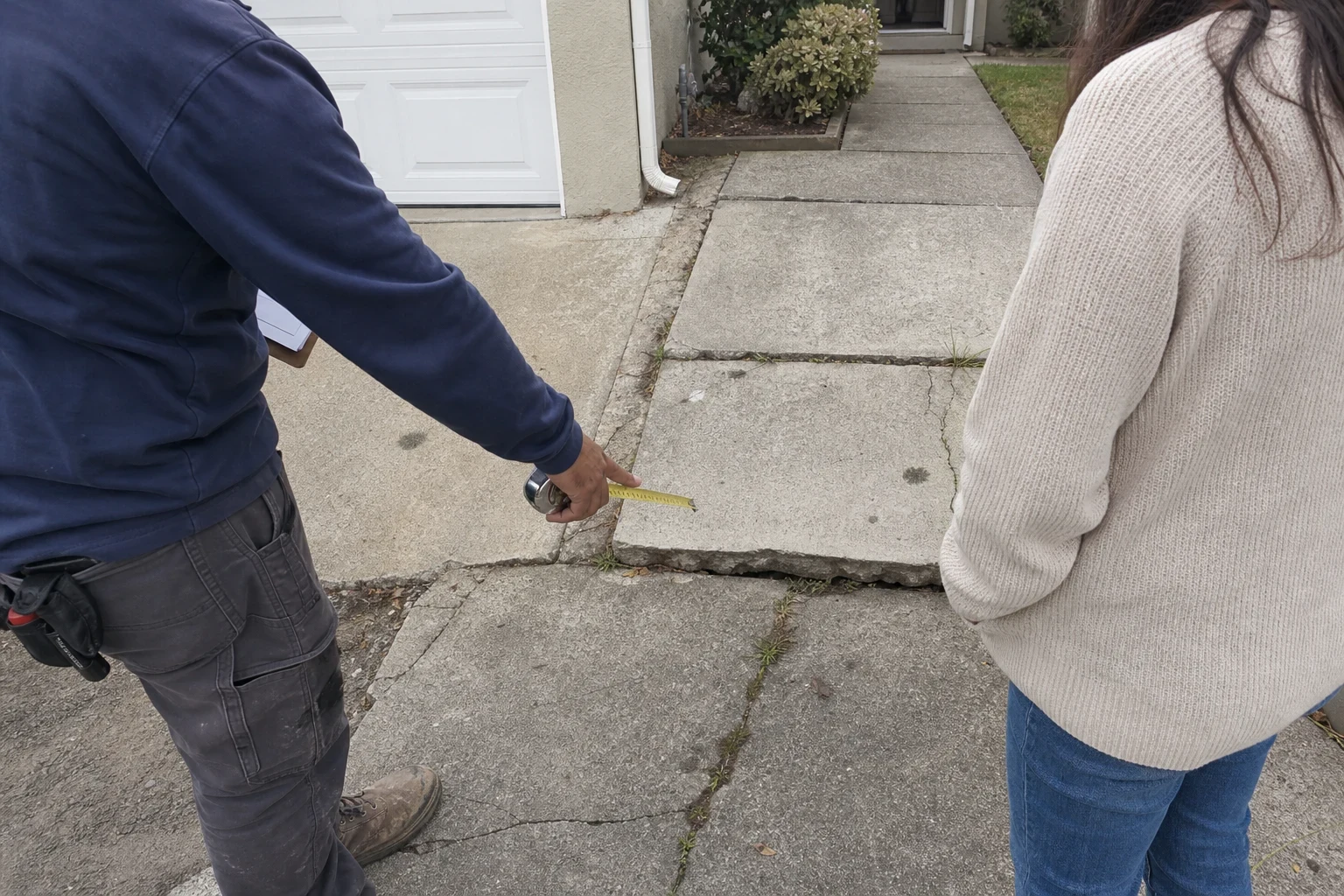
If you have been parking on the edge of a residential driveway, broken corners and settled panels are common. A dedicated pad takes that load off the driveway.
Water pooling under the coach
Standing water around tires and jacks speeds up rust underneath and feeds weeds. A sloped slab drains it off.
A new RV or trailer on the way
A longer or heavier unit than you had before often needs more length, a wider approach or a thicker pad. Planning before delivery avoids parking it on the street.
What shapes the cost of an RV pad
The price of an RV pad comes from its size and thickness, and from what it takes to reach the spot. We walk through each factor on the estimate so nothing appears later as a surprise.
Size and thickness
A pad for a 40-foot motorhome uses far more concrete and steel than one for a small trailer. Thicker sections also add base material and labor.
Access to the site
A wide driveway lets the truck pour directly. A narrow side yard may need a concrete pump or wheelbarrows, and sometimes a gate or fence section removed and reset.
Soil and grading
Soft or expansive soil may need deeper excavation and more base. Sloped lots can call for extra grading or a short retaining edge.
Removal of what is there
Hauling out old concrete, gravel or turf adds labor and disposal. Relocating sprinkler lines in the path is part of the same picture.
Permits and approach work
Widening a curb cut or driveway approach usually involves a city permit and inspection, which we include in the plan when it applies.
How the work runs
- 1
Site visit and a clear plan
We walk the yard with you, look at gate width, slope and access, and talk through any HOA guidelines you need to check. You get a written, line-item estimate that explains each part of the work.
- 2
Protecting the route
Before excavation we lay down ground protection, mark irrigation and utilities, and agree where materials will be staged. We tell you which days are noisy and when the driveway may be blocked.
- 3
Base, forms and steel
We excavate, compact the base and set forms to the planned grade. Reinforcement goes in last, and we check the slope before ordering concrete.
- 4
Pour and finish
The concrete is placed, struck off and given a broom finish, with joints tooled or cut on schedule. We keep the mix and the overspray contained to the work area.
- 5
Curing and handover
We explain how long to stay off the slab with foot traffic, a car and finally the RV. A heavy coach should wait until the concrete has gained most of its strength, and we give you a clear date.
RV pad questions
How thick should an RV parking pad be?
Thicker than a typical patio or walkway. The right depth depends on the weight of your RV and the soil underneath, so we confirm both at the site visit. Base preparation and reinforcement count just as much as the thickness.
How soon can I park my RV on the new pad?
Walking on it is fine within a day or two, and a car usually within about a week. A heavy motorhome should wait longer while the concrete gains strength. We give you a specific date based on the weather and the mix.
Will my HOA allow an RV pad?
Many communities have rules on RV parking and visible hardscape. We recommend checking with your HOA before work starts, and we can provide the dimensions and drawings they usually ask for.
Can you build the pad in a narrow side yard?
Often, yes. We check gate width and clearance from the house, then plan the pour with a pump or smaller equipment if needed. We also look at drainage along the house, since side yards tend to collect runoff.
Can the pad match my existing driveway?
We can match the broom direction and joint pattern, and talk through color options. New concrete always looks a little lighter at first and evens out as it weathers.
Plan a pad that fits your RV and your yard
Tell us about your RV, where you want to park it and how the yard is laid out. We will explain the options and what the work involves before anyone sets foot on your lawn.