ServicesWalkways and Sidewalks
Walkways and Sidewalks in Lake Forest
We form and pour new concrete walkways and sidewalks that feel solid underfoot, drain away from your home and sit flush with the lawn. Beds and sprinklers are protected while we work, and you know what is happening at each stage.
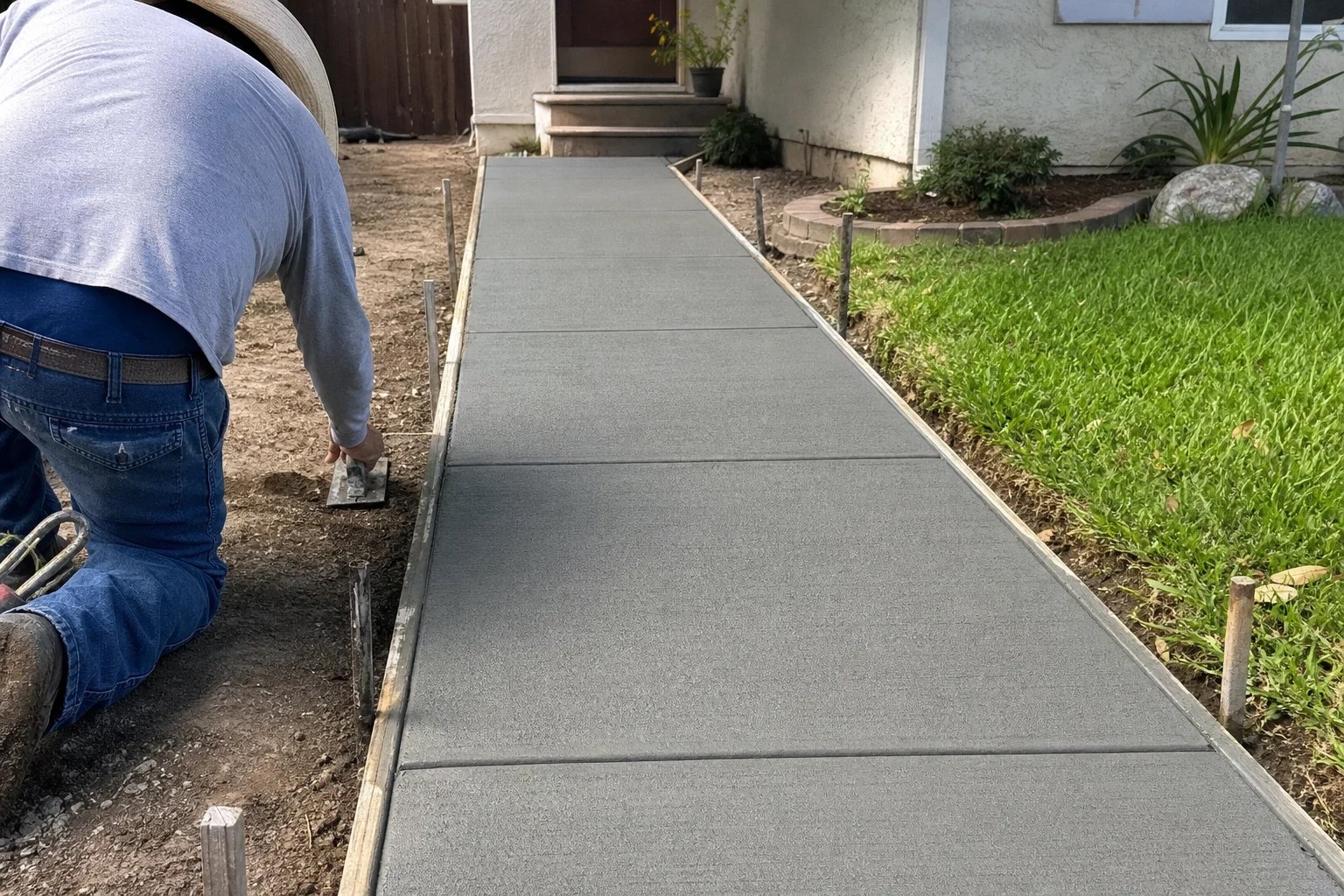
A path you use every day, built to last
A walkway is the first thing guests step on and the path you take every day, from the driveway to the front door, around the side of the house or out to the garden. We remove what is there now and pour a new concrete path at the right width, height and slope for how your family actually moves around your home.
These paths almost always run beside planting beds, lawn edges and irrigation lines. We plan for that from the start. Plants are covered or tied back, sprinkler heads are flagged before we dig, and forms go in without crushing the beds beside them. You hear from us before the old path comes out, before the pour and when the new surface is ready for foot traffic.
Finish choices include a fine broom texture, smooth troweled borders, exposed aggregate and patterned work. If you are drawn to a pattern, our Stamped Concrete page explains how that process runs.
What your new walkway includes
- Tear-out of the existing path
- We break up the old concrete, pavers or gravel and haul all of it off. Where the path meets the driveway or porch, we shield those edges so they come through without chips.
- Digging and a compacted base
- We excavate to the proper depth and compact a layer of crushed rock. Much of the soil here is expansive clay that moves when it gets wet, and a solid, level base is what keeps the slab from sinking in spots later.
- Forms, fall and reinforcement
- Forms are set against a string line with a slight pitch that sends rain into the yard and away from your foundation. Curved sections use bendable forms, and reinforcement is chosen for the length of the path and how it will be used.
- Surface, edges and joints
- We round the edges with a hand tool and cut joints at regular intervals. Those joints give the slab a planned place to relieve stress as it shrinks, so the surface between them stays clean. A broom texture keeps the path grippy when the sprinklers have left it wet.
- Protection for the landscape
- Plywood is laid over the lawn along the wheelbarrow route, and tarps go over any beds close to the pour.
- Careful cleanup
- Chutes and tools are washed out into a contained area, never into the street gutter or your planters. We sweep up, clear away debris and leave the edges ready for you or your gardener to fill in and replant.
Signs it is time for a new walkway
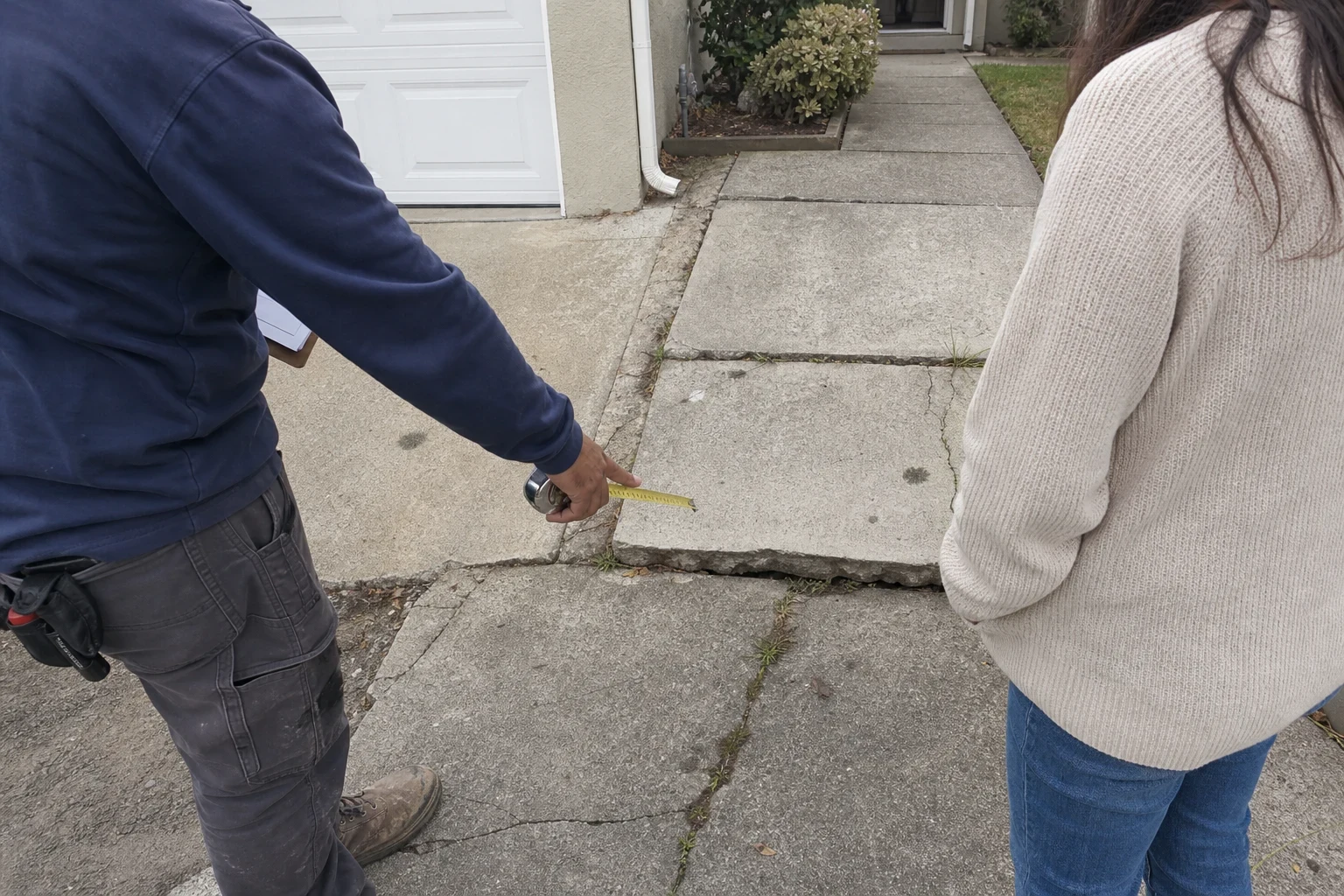
Lifted edges that catch a toe
Tree roots and shifting soil can push one section above the next. A half-inch lip is enough to trip a guest carrying groceries or an older relative at night.
Water that pools or runs toward the house
If puddles sit on the path after watering, or runoff heads toward the foundation, the slope is wrong. A new pour lets us correct the fall rather than work around it.
Crumbling or flaking surface
Spalled, pitted or powdery concrete only gets rougher with time.
A path that does not go where people walk
A worn track across the lawn usually means the walkway is in the wrong place or too narrow. Many older paths are barely wide enough for one person, and a wider route makes the entry feel more generous.
An entry that no longer matches
After a new driveway or patio, a tired walkway stands out. We can match finish and color so the front of your home reads as one piece.
What moves the cost of a new walkway
We measure and price each path on its own terms. Your written estimate breaks the job into its parts, so the number you approve is the number you see at the end. These are the factors that change it the most.
Size of the path
Square footage drives the amount of concrete, crushed rock and crew time. Going from a narrow path to a comfortable two-person width adds material, though the increase is often smaller than homeowners assume.
The old surface underneath
Thick existing concrete, pavers set in mortar or roots running under the path all take longer to break out and haul away.
How we reach the route
A path close to the street can take concrete straight from the truck chute. A route behind the house or down a tight side yard may need a pump or a line of wheelbarrows, and that adds labor.
Finish and shape
A straight path with a broom texture is the most direct to build. Curves, smooth borders, exposed aggregate or a stamped pattern call for more forming and more hands during finishing.
Slopes and permits
A steep grade may need a landing or a few steps, which our Concrete Steps and Stairs page explains. Work on a sidewalk in the public right-of-way usually requires a city permit, and we pull it when the job calls for one.
How the work runs
- 1
A conversation and a site visit
It starts with a phone call. We then walk the route with you, measure, talk about width, finish and where water should go, and give you a written, line-item estimate.
- 2
Protection and tear-out
On day one we flag sprinklers, cover beds, lay plywood across the lawn and remove the old path. We tell you in advance roughly how loud the breaking will be and how long it lasts.
- 3
Base and forms
The base is compacted and the forms are set and checked for slope. Before anything is poured, we walk the layout with you so the shape and width are exactly what you expect.
- 4
Pour and finish
Concrete comes by truck and, where access is tight, by wheelbarrow or pump. The crew finishes the surface, tools the edges and cuts the joints the same day.
- 5
Curing and walkthrough
We let you know when light foot traffic is fine, usually after a day or two, and how to keep the new concrete damp while it gains strength. A final walkthrough confirms everything is clean and as planned.
Common questions about new paths
When is the new walkway ready for foot traffic?
In most weather, walking on it carefully is fine after a day or two. The concrete continues to harden for several weeks, so we ask that wheeled carts and heavy pots stay off it a bit longer. You will get specific timing from us once your pour is done.
Will my lawn and plants survive the work?
We plan the job around them. Beds get covered, shrubs are tied back, sprinkler heads are flagged and plywood goes down wherever we cross the grass. Turf right along the new edge may need some extra water afterward, and we will point out those spots.
Can the new walkway match my driveway or patio?
In many cases, yes. We can repeat a broom texture, exposed aggregate or a stamped pattern and bring the color close. Your existing concrete has weathered, so the new pour will look brighter at first and tone down with time.
Is cracking something I should expect?
All concrete shrinks as it cures, and fine cracks are part of that. What we control is where they appear. A well-compacted base, the right reinforcement and joints cut at regular intervals give the cracks a planned place to form, inside the joint lines rather than across the open surface.
Do I need to be home while you work?
Not all day. We like to see you at the start of each work day and review the layout with you before the pour. After that we update you by phone, and we agree on gates and access ahead of time.
Start with a walk down your current path
Tell us where the walkway runs now and where you would like it to go. We will talk through width, finish and how we will protect the yard around it.