ServicesConcrete Pool Decks
Concrete Pool Decks in Lake Forest
We build new concrete pool decks that drain away from the water, stay comfortable underfoot and look finished up close. Your pool is covered, your plantings are shielded, and you hear from us before anything changes on the plan or the schedule.
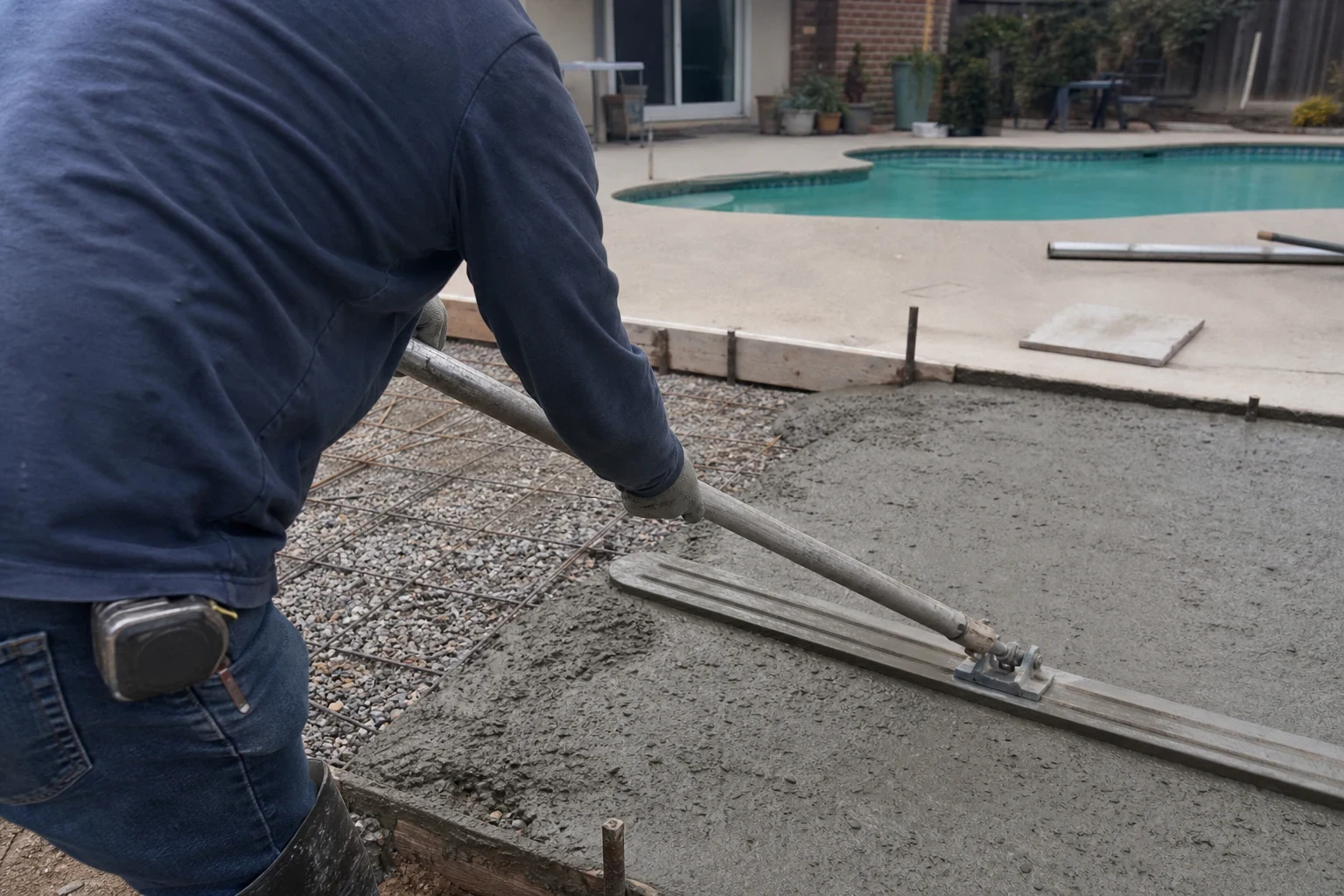
A deck planned with the pool, not beside it
Few slabs at your home work as hard as a pool deck. Every day it handles splash water, pool chemicals, bare feet and summer sun, and it meets the pool's edge directly, where a sloppy pour can stain tile or wash slurry into the water.
We treat the deck as part of the pool. That means a slope that sends water toward the yard or into deck drains, joints set so the concrete can move without cracking across where people walk, and a texture picked for wet feet. Then we pick a finish to match the house, anywhere from a fine broom or salt finish to stamped concrete that links to your patio.
When an old deck is coming out, we remove it with care around the coping and equipment, and we go over what turns up underneath with you before any new concrete is placed.
What comes with your pool deck project
- Covering the pool and equipment
- Before demolition or pouring begins, we cover the pool and guard the tile line. Pump and filter equipment gets wrapped to keep dust and wash water out.
- Removing the old deck with care
- Old concrete or pavers are cut and broken out in sections so the coping and bond beam take no hammering. Debris goes out by the shortest protected path, over boards on the lawn and plywood on walkways.
- Base, grade and drains
- We compact the base, set grades that carry water away from the pool and add deck drains where the yard calls for them. Water left standing on a deck is a slip hazard and wears the surface sooner.
- Steel and joints
- Rebar or wire sits on supports so it ends up inside the slab rather than on the soil. Control joints, plus an expansion joint at the coping, let the deck and pool shell move independently.
- A surface for wet bare feet
- We suggest textures that grip, like a salt finish, light broom or textured stamp, and a lighter color can help keep the surface cooler.
- Sealer and cleanup
- After the concrete cures, we can apply a sealer made for pool water. Forms, debris and washout are hauled off, and we rinse the pool area before handing it back.
Signs it is time for a new pool deck
Water pools near the edge
Puddles that sit after swimming mean the slope has settled or was never right. Water can soak under the slab and toward the pool shell.
Wide cracks and raised edges
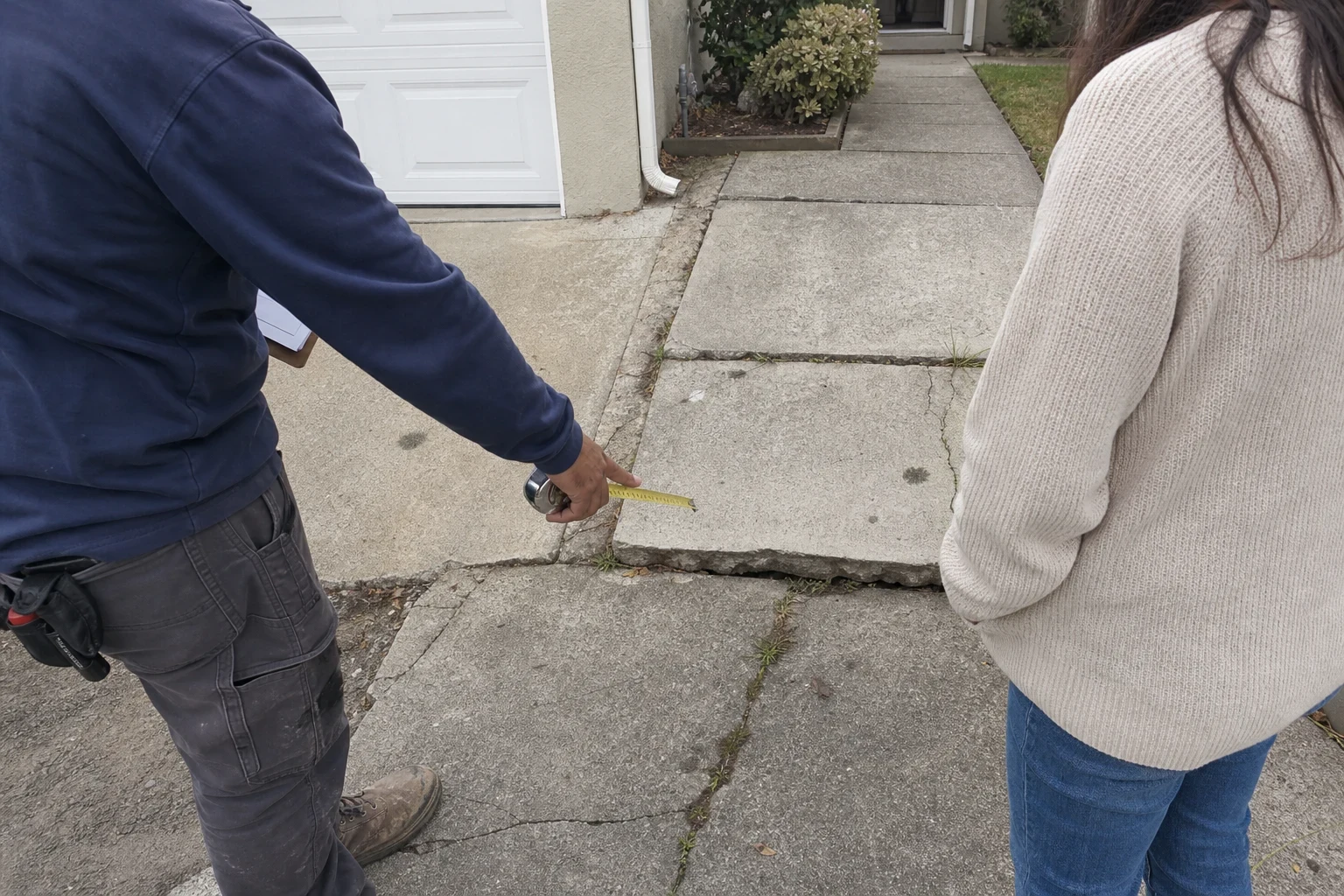
Cracks that have opened up or panels that now sit higher than their neighbors become trip points for kids running around the pool.
A surface that has worn smooth or flaked
Chlorine, salt and years of sun can wear the top layer away. A slick or scaling deck is uncomfortable underfoot and hard to keep clean.
The deck no longer fits how you use the yard
Maybe you want room for loungers, a shade structure or a wider path to the patio. A new pour is the right time to change the shape.
A pool remodel is planned
New coping or tile is often the natural moment to replace the deck so the two are built to meet cleanly.
What drives pool deck pricing
We price each pool deck from its own measurements and site, so the quote comes after a visit. Every part of the work appears as its own line, and we call you before making any change that would affect the total.
Area and outline
Most of the price comes from square footage. A freeform pool with curving edges needs forms bent by hand, which takes more time than the straight edges of a rectangular pool.
Taking out the old deck
Removing existing concrete, particularly thick or heavily reinforced slabs, means extra labor and hauling. Working carefully near the coping takes time.
Surface and color
A broom or salt finish is less costly than stamped patterns or integral color. Sealers and cooling coatings are priced as their own items.
Reaching the yard and moving water
A tight side yard can mean wheelbarrows or a pump truck instead of pouring straight off the truck. Deck drains and added grading increase the scope where the yard calls for them.
Ground beneath
A lot of south Orange County yards sit on clay that expands when wet, which may require a deeper or more thoroughly compacted base.
How a pool deck job runs
- 1
Walkthrough and plan
We look at the pool, the yard and how water moves today, and we note access routes, plantings to protect and where equipment sits. You get a clear written scope, and if your city requires a permit, we pull it.
- 2
Protection and removal
The pool is covered, landscaping near the work is shielded, and the old deck comes out. We tell you each evening what happens next.
- 3
Forms, base and steel
We set forms, grade and compact the base, and place reinforcement and joint material. You can walk the layout with us before the pour.
- 4
Pour and finish
Concrete is placed, leveled and given its finish while it is still workable. Our crew keeps slurry and wash water away from the pool and off your hardscape.
- 5
Cure, seal and hand back
We give you clear guidance on when to walk on it and when to set furniture down, then come back to seal if that is part of the job. The area is cleaned before we leave.
Common pool deck questions
Can dust or slurry end up in the pool?
Before any cutting or pouring, we cover the pool and tape off the tile line. Washout is kept contained and never rinsed toward the water. If something does get in, we let you know and clean it out before leaving.
When can we use the pool area again?
Walking lightly is usually fine after a day or two, weather depending. Furniture and heavier use need more time, and we give you exact dates for your deck. Once the cover is off, the pool can usually keep running.
Will the coping need replacing as well?
Not in every case. Sound coping can stay, with the new deck poured up to it and an expansion joint in between. If it is loose or the pool is being remodeled, planning both at once often makes sense, and we will walk you through the tradeoffs.
How hot does the deck get in summer?
Light colors and textured finishes stay much more comfortable than dark, smooth concrete. Some homeowners also add a cooling topcoat. We can bring samples so you can pick with bare feet in mind.
Can the deck tie in with my patio or walkway?
Yes. We can repeat a broom texture or extend a stamped pattern from your patio across the deck. Matching the color of older concrete exactly is hard, and we will be straight with you about the likely result.
Should a pool deck be sealed?
A sealer helps the surface stand up to chlorine, salt and stains. We suggest a penetrating or slip-resistant sealer made for pool areas, and we can tell you how often to reapply it.
Want to talk over your pool deck?
Tell us about the pool, your current deck and how you'd like to use the area. We will go over the options and explain what the job would take.