ServicesDriveways
Concrete Driveways in Lake Forest
We remove worn driveways and pour new ones on a compacted, properly graded base. Your lawn edges, planters and garage are covered before any demolition starts, and you hear from us each day about what happens next and when you can park again.
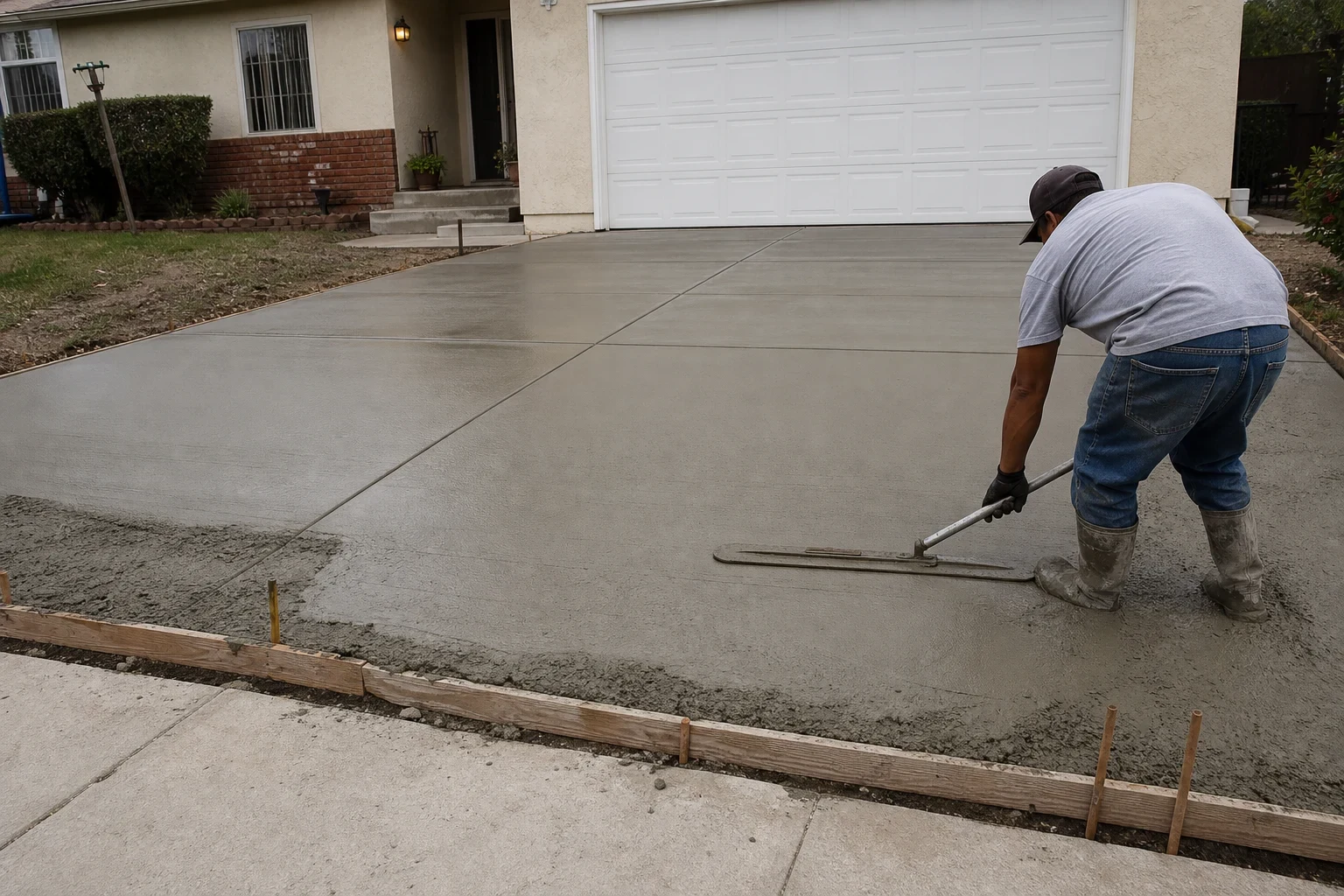
A new driveway, built from the ground up
A driveway carries the weight of your cars every day, sheds rainwater away from your garage and sets the first impression of your home. When the slab has sunk, heaved or broken into pieces, patching rarely holds. Replacing it lets us correct what went wrong underneath, which is usually where the trouble started.
Much of the soil in south Orange County is clay that swells when wet and shrinks in the dry months. We plan the base, thickness and reinforcement around that movement so the new slab stays flat and drains the way it should.
We also treat the work as something happening at your home, not just on a jobsite. Plywood goes down over walkways, plastic over plants, and the street stays swept.
What your driveway project includes
Careful demolition and haul-off
We break out the old concrete in manageable sections and haul every piece away. Nearby walls, sprinkler heads and your garage door are protected first.
Base preparation and grading
We excavate to the right depth, bring in fresh base rock and compact it in layers. The grade is set so water runs toward the street, not toward your garage.
Steel reinforcement
Rebar or wire mesh is placed on supports so it sits inside the slab where it does its job, rather than resting on the dirt below.
Pour and finish
We place the concrete and finish it in the style you choose, from a clean broom finish to exposed aggregate. For pattern and color, see our Stamped Concrete page.
Control joints
Joints are cut at planned spacing so the concrete has a straight, tidy place to relieve stress as it shrinks and cures.
Cleanup and walkthrough
Forms come out, edges are backfilled and the area is swept and rinsed. We walk the finished driveway with you and explain curing care.
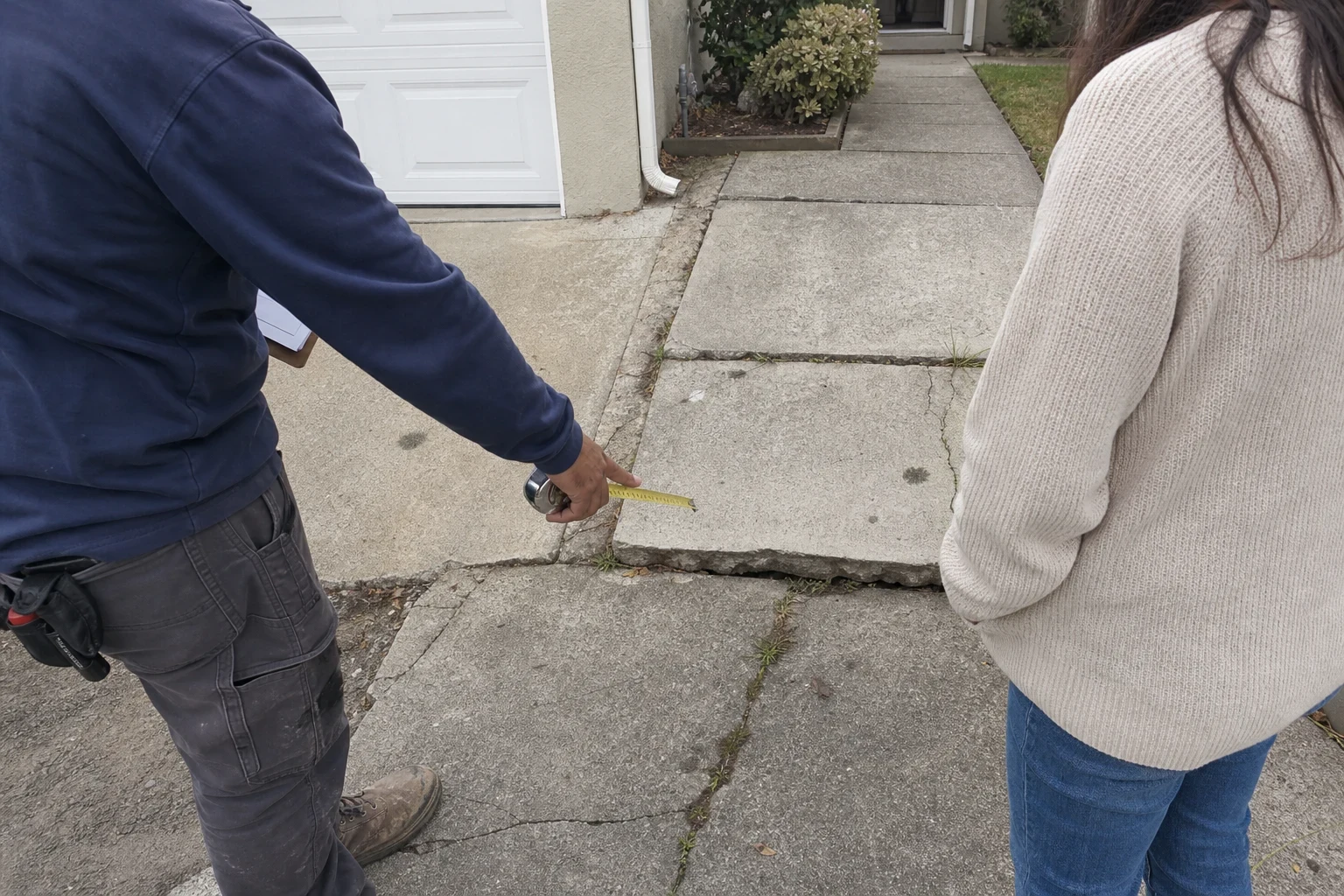
Signs it is time for a new driveway
- Slabs that have sunk or lifted
- Uneven sections create trip edges and catch car bumpers. Movement like this usually means the base has failed, and a new slab is the lasting answer.
- Water pooling near the garage
- If rain collects against the garage door or flows toward the house, the driveway has lost its slope.
- Wide, spreading cracks
- Thin surface lines come with almost every slab and are not a worry on their own. Gaps wide enough to catch a heel, or lines that keep branching across the concrete, tell us something is shifting underneath.
- Crumbling surface and exposed stone
- Scaling and pitting mean the top layer is wearing away, and it only gets rougher with time.
- Roots pushing up the concrete
- Tree roots under a driveway keep lifting it. Replacement lets us plan around them.
How the work runs
- 1
Walkthrough and written estimate
We measure, check drainage and look at access for trucks. You get a line-item estimate by phone and in writing so nothing comes as a surprise.
- 2
Protection and demolition
Before the first break, we cover planters, lawn edges and walkways. Then the old driveway comes out and leaves the property the same day.
- 3
Base, forms and steel
We grade and compact the base, set forms to the agreed shape and place reinforcement. You can see the layout before we pour.
- 4
Pour day
The concrete is placed, leveled and finished, and joints are cut. We let you know the evening before when the truck is due.
- 5
Curing and handover
We tell you when foot traffic and cars can return, then clean up and walk the driveway with you.
What shapes the cost of a driveway
Every driveway is priced from its own measurements and conditions. The estimate lists each part of the work so you can see where the money goes, and we explain any choice that changes the total.
- Size and thickness
- Square footage drives most of the cost. A thicker slab for heavier vehicles uses more concrete and steel.
- Removing the old slab
- Thicker or heavily reinforced old concrete takes longer to break out and costs more to haul away.
- Soil and base work
- Soft or expansive soil may need deeper excavation and more base rock before we can pour.
- Finish and design
- A broom finish is the simplest. Exposed aggregate, colored concrete, borders or stamped patterns add labor and material.
- Access and permits
- Tight access may call for a concrete pump. Work at the curb or public sidewalk usually needs a city permit, which we pull when required.
Driveway questions
- How soon can I drive on my new driveway?
- Walking is usually fine after a day or two. Cars should stay off for about a week while the concrete gains strength. Larger trucks and trailers need longer, and we give you specific dates for your slab.
- Will I still be able to use my garage?
- Your garage stays closed to cars from demolition through curing, so plan on street parking for that stretch. We confirm the schedule with you before we begin so you can arrange it.
- Does my HOA need to approve the work?
- Many neighborhoods around Lake Forest have an HOA with rules on driveway color and finish. We can give you the details your board usually asks for, such as dimensions and finish samples.
- Will the new driveway crack?
- All concrete shrinks as it cures, and some fine cracking is normal. Control joints, a well-compacted base and proper reinforcement keep cracking minor and directed to the joints.
- Should I seal my driveway?
- Sealing helps resist oil stains and makes cleaning easier, especially on exposed aggregate or colored concrete. We wait until the slab has cured, then talk through whether it is worth it for your finish.
Start with a conversation about your driveway
Tell us how your driveway is holding up and what you would like it to look like. We will talk through the options and set a time to measure.