ServicesGarage Floors
Concrete Garage Floors in Lake Forest
We remove a tired garage slab and pour a new one that sits level, drains toward the door and takes a coating well if you want one later. Your walls, the door into the house and the driveway are covered before any work begins.
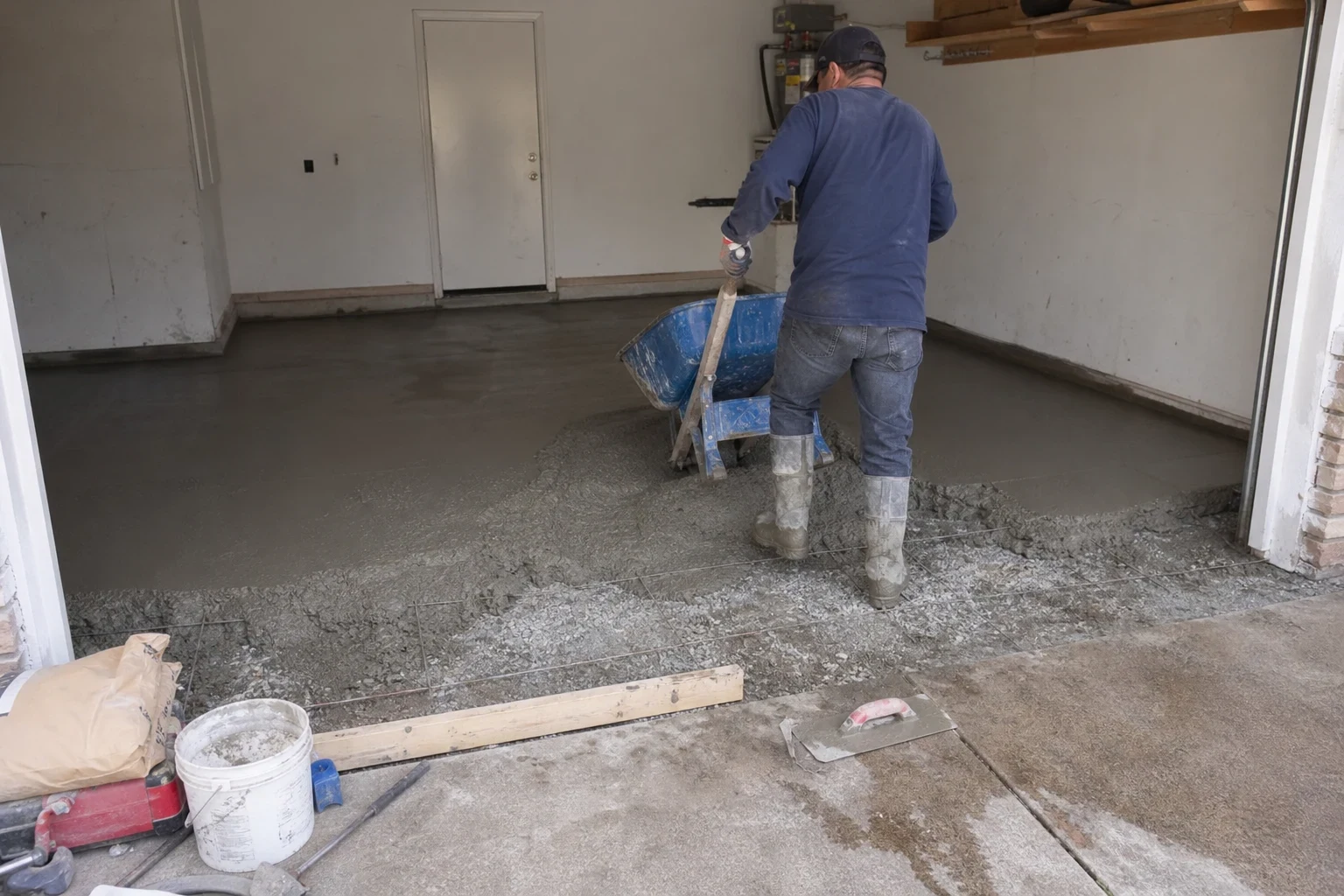
A new floor for the room you use every day
A garage floor carries the weight of your cars, takes oil drips and tire heat, and often holds the water heater, laundry or a workshop. When the old slab is cracked through, sinking or holding water, a new floor is often the better answer.
We plan a garage floor around how you use the space. A floor that will hold two cars and a storage wall needs different reinforcement than one that will become a gym. We ask, measure, and explain what we would pour and why before anything is scheduled.
Because the garage connects straight to the house, we treat it like an interior room. Dust and foot traffic stay out of your living space, and you know each morning what is happening and when you can park inside again.
What a new garage floor includes
- Careful removal of the old slab
- We saw-cut the perimeter so the stem walls and door threshold stay clean, then break and haul the old concrete out. Plywood runners protect the driveway on the way to the truck.
- Base preparation and compaction
- Most failing garage floors fail from below. We correct soft spots in the subgrade, add base rock where it is needed and compact it in lifts so the new slab has firm, even support.
- Vapor barrier and reinforcement
- A vapor barrier under the slab slows moisture coming up from the soil, which matters for storage and for any coating you add later. Rebar or wire mesh is set on supports so it ends up inside the concrete, where it does its work.
- Slope toward the door
- We set forms and screed lines so the floor falls gently toward the garage door. Water from a wet car or a washing machine drains out instead of pooling against the house wall.
- Control joints and finish
- Joints are cut where the slab is most likely to want to crack, so any cracking happens neatly in the joint. You choose the finish: a smooth steel trowel for easy sweeping, or a light broom texture for better grip.
- Protection and cleanup
- Plastic sheeting goes over walls, cabinets and the house door before we start. When we leave, the garage, driveway and nearby planters are clean.
Signs your garage floor is ready to be replaced
Cracks that have shifted
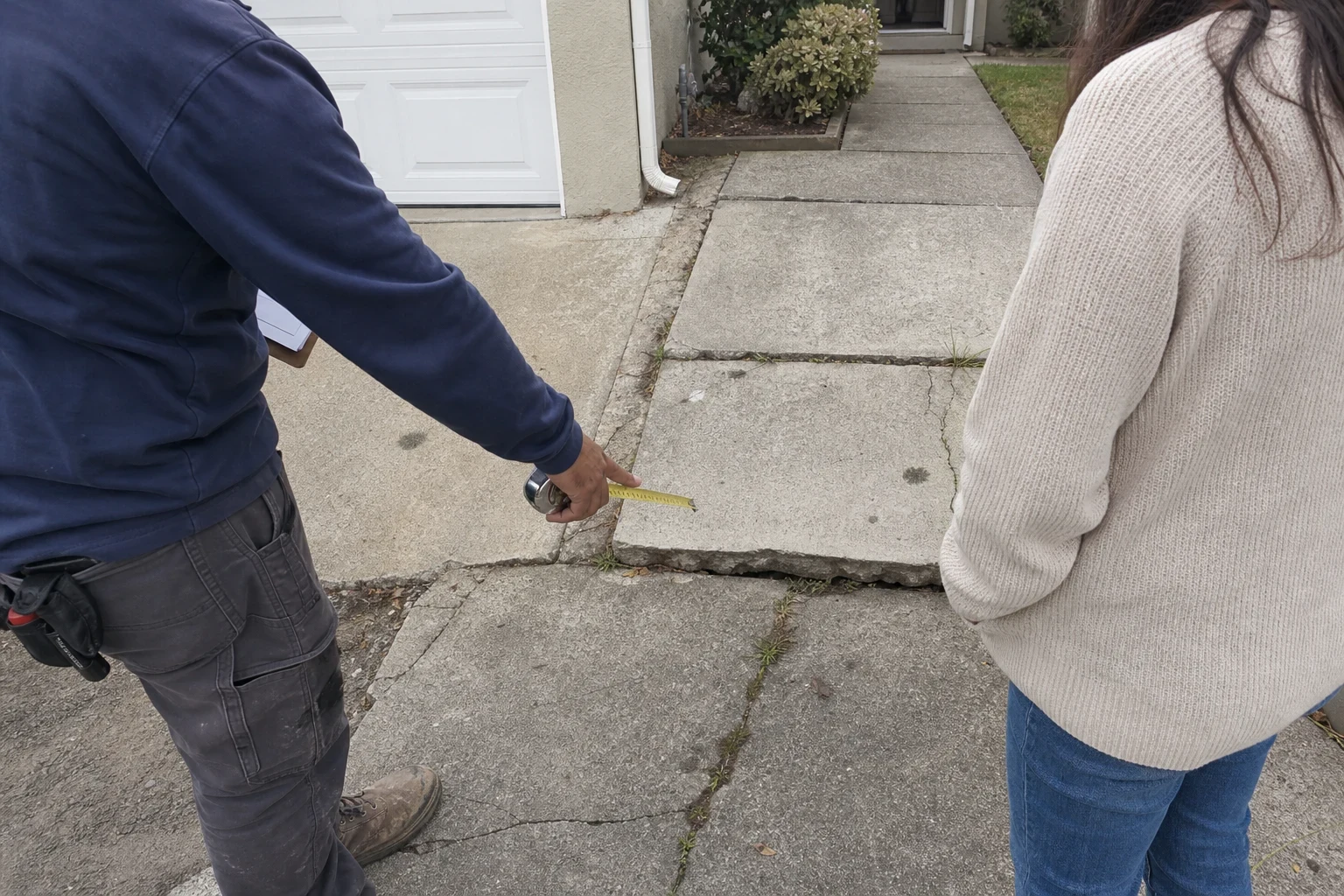
Fine hairline cracks come with almost any concrete floor. If the two edges of a crack no longer line up, so you can feel a ridge underfoot, or the gap grows wider each year, the ground below the slab has moved.
Sunken sections or a dip at the door
A slab that has settled leaves a low area by the threshold or along a wall. Tires drop into it every time you park, and water gathers there.
Water pooling inside
Standing water after rain or a dripping car means the floor no longer falls toward the door. In older Lake Forest garages this tends to appear once the first winter storms arrive.
Dusting, flaking or pitting
A floor that leaves gray powder on your shoes, or loses its surface in patches, was often finished poorly or has simply worn through. A coating will struggle to grip it.
Planning a coating or a conversion
An epoxy coating, home gym or workshop will only look as good as the slab beneath it, and a badly damaged floor shows through. A sound new floor first means the job is done once.
How your garage floor project runs
- 1
Walkthrough and quote by phone
We talk about how you use the garage, then look at the slab, the door threshold and access from the street. You get a clear written scope and a schedule that shows the days you will need to park outside.
- 2
Protect and remove
You clear the garage, and we cover walls, the water heater and the house door. The old slab is cut, broken and hauled away, usually within a day.
- 3
Prepare the base
We grade and compact the subgrade, lay the vapor barrier and set reinforcement and forms. If a permit or inspection is required for your project, we arrange it before the pour.
- 4
Pour and finish
Concrete is placed, screeded to slope and finished to the texture you chose. Control joints are cut once the surface can take it.
- 5
Cure and hand back
The floor is kept moist so it cures evenly. We tell you when you can walk on it, when you can park on it, and how long to wait before any coating goes down.
What shapes the cost of a garage floor
Every garage is different, so we price each one after seeing it. These are the details that move the number, and we explain each one in your quote so nothing comes as a surprise.
- Size and thickness
- A two-car or three-car garage uses more concrete and labor than a single bay. Heavier vehicles or a planned workshop may call for a thicker slab.
- Removal and haul-off
- Thicker old slabs, or slabs with heavy reinforcement, take longer to break and weigh more to haul. A tight driveway or long carry also adds time.
- Condition of the base
- Soft or wet soil under the old floor needs to be dug out and replaced with compacted base rock. We only know the full extent once the old slab is up, and we show you what we find before adding anything.
- Finish and extras
- A smooth trowel finish, a broom texture, a slope correction at the threshold or a floor drain each change the labor involved.
- Permits
- Some garage floor projects need a permit and inspection. When yours does, that cost is listed separately in the quote.
Garage floor questions
Something not covered here? (949) 749-7684
How long until I can park in the garage again?
You can usually walk on a new floor the day after the pour. We generally recommend waiting about a week before parking a car on it. Full strength takes around four weeks, and we will give you dates for your specific floor.
Do I need to empty the whole garage?
Yes, the floor needs to be completely clear so we can remove the old slab and pour the new one. Items that cannot move, like a water heater or built-in cabinets, stay in place and we cover and work around them.
Will dust get into the house?
We seal the door between the garage and the house with plastic before we cut, and we use water while saw-cutting to keep dust down. Our crew uses the garage door and driveway, not your hallways.
Can I put epoxy on the new floor?
Yes. New concrete needs to cure and dry before a coating goes on, usually about four weeks. The vapor barrier we install underneath helps the coating bond and last.
Why not just patch my old floor?
We pour new garage floors rather than patch existing ones. When a slab has settled, lost its slope or is flaking across the surface, a new floor over a properly prepared base is usually the lasting fix. If your floor does not need replacing, we will tell you so.
Ready for a garage floor you can count on
Tell us about your garage and how you want to use it. We will explain what a new floor involves, how we will protect your home, and what to expect day by day.